
Main Courses
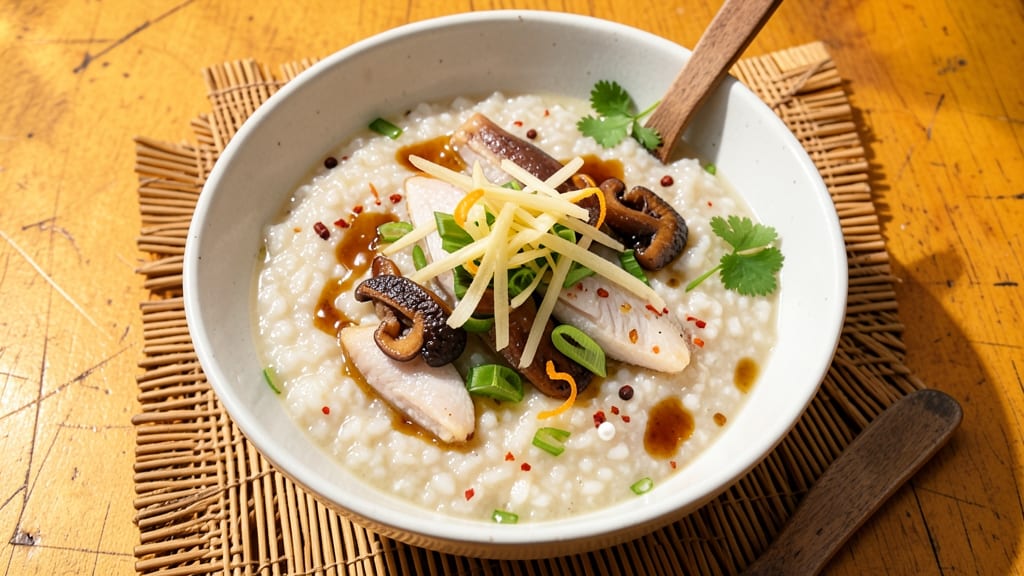
This Chinese rice porridge with fish recipe transforms simple ingredients into a comforting, restaurant-quality dish that balances silky congee with delicate, flaky steamed fish. 💫 The secret lies in slow-cooking the rice until it reaches that signature creamy texture while gently poaching the fish to preserve its tenderness.
This dish isn't just nourishing—it's a celebration of Chinese home cooking traditions, where every spoonful delivers warmth and depth.
The beauty of this recipe is in its versatility—whether you prefer a light herbal porridge or a richer version with ginger and soy, the fish adds a luxurious touch without overwhelming the delicate flavors.
The key technique is patience: letting the rice simmer for hours until it dissolves into a velvety consistency while the fish steams just enough to stay moist and flaky. This method ensures each bite is perfectly balanced between the soft porridge and the delicate fish.
What makes this dish truly special is how it comes together—simple ingredients elevated by technique. The porridge absorbs the subtle flavors of ginger and scallions, while the fish, poached in a light broth, stays tender and flaky.
Garnished with a drizzle of sesame oil and fresh herbs, it’s a dish that feels both comforting and sophisticated. Perfect for a cozy dinner or a special occasion, this recipe delivers restaurant-quality results at home.
For those looking to customize, you can add mushrooms for earthiness or a soft-boiled egg for extra richness. The fish can be swapped for shrimp or tofu for a vegetarian twist, but the essence remains the same: a harmonious blend of textures and flavors that makes every spoonful satisfying.
Let’s bring this comforting classic to your table.
Ingredients for chinese rice porridge fish
Silky jasmine rice and delicate fish create a comforting yet elegant dish—simple ingredients, refined technique.
| Ingredient | Amount | Notes |
|---|---|---|
| Jasmine Rice 🍚 | 1 cup | Uncooked, long-grain preferred |
| White Fish Fillets 🐟 | 12 oz | Cod, haddock, or tilapia preferred |
| Dried Shiitake Mushrooms 🍄 | 4 whole | Rehydrated for umami depth |
| Fresh Ginger 🌿 | 1 tbsp | Minced, for aromatic base |
| Green Onions 🧅 | 4 whole | White and green parts separated |
| Light Soy Sauce 🥄 | 2 tbsp | For subtle salty balance |
| Sesame Oil 🫒 | 1 tbsp | Toasted, for finishing |
| Chicken or Vegetable Stock 💧 | 4 cups | Low-sodium preferred |
| Cilantro Leaves 🌿 | ¼ cup | Chopped, for fresh garnish |
| Garlic Cloves 🧄 | 2 cloves | Minced for aromatic depth |
| Salt 🧂 | 1 tsp | Kosher or sea salt |
| White Pepper 🌶️ | ¼ tsp | Freshly ground for subtle heat |
| Sesame Seeds 🌾 | 1 tsp | Toasted for crunch |
The jasmine rice is the foundation—look for long-grain varieties at Asian markets or well-stocked grocery stores like Whole Foods for optimal texture. Dried shiitake mushrooms from bulk bins add umami depth without overwhelming the delicate fish flavors. For the fish, cod or haddock from the seafood counter (ask for sustainably sourced fillets) stays flaky when poached gently. Fresh ginger and garlic should be brightly colored with no signs of mold—Trader Joe's or local farmers' markets are great sources. The stock is non-negotiable: low-sodium chicken or vegetable stock ensures the porridge isn't too salty.
No dried shiitake? Fresh shiitake mushrooms work at half the quantity, but rehydrate them first in warm water. Swap white fish for shrimp or scallops if preferred, but adjust cooking time to avoid overcooking. The soy sauce can be tamari for gluten-free, and if you're out of sesame oil, toasted peanut oil adds a similar nutty finish. For extra richness, a soft-boiled egg can be added at the end—just poach it separately and place it gently on top. The green onions should be white parts for broth, green for garnish—don't skip the green tops for that fresh pop of color.
Store the porridge base (without fish) for up to 3 days in the fridge—reheat gently with a splash of water. The fish should be added freshly when serving to maintain its flakiness. For meal prep, poach the fish separately and assemble just before eating. Garnishes like cilantro and sesame seeds keep best in the fridge for 2 days—wrap herbs in damp paper towels to preserve freshness. This dish reheats beautifully, but avoid microwaving the fish—steam it gently to retain moisture. Freeze portions without the fish for up to 1 month, thawing in the fridge overnight.
Why You'll Love This Recipe
- I swear by this trick: soak those dried shiitakes overnight, then just tear them into the pot—no knife required. The fish fillets cook in minutes while the rice simmers, and honestly? The ginger and green onions go in whole if I’m lazy. It’s the kind of dish that makes me feel like I’ve done something fancy without actually trying.
- No-Chop Needed: I swear by this trick: soak those dried shiitakes overnight, then just tear them into the pot—no knife required. The fish fillets cook in minutes while the rice simmers, and honestly? The ginger and green onions go in whole if I’m lazy. It’s the kind of dish that makes me feel like I’ve done something fancy without actually trying.
- Umami Bomb: Between the rehydrated shiitakes and that first bite of flaky fish, this porridge hits different. The ginger adds a slow, warm kick, while the green onions brighten everything up at the end. It’s not just comforting—it’s ridiculously satisfying, the kind of flavor that makes you want to eat it straight from the pot.
- Lazy Meal Prep: I make a big batch on Sundays and keep it in the fridge for days. The rice thickens beautifully when reheated, and the fish stays tender—just add a splash of water if it’s too dry. Perfect for when I’m too tired to cook but still want something hearty. (Yes, even on a Tuesday night.)
Step-by-step instructions for Chinese rice porridge with fish
Master this comforting blend of silky congee and delicate fish using precise techniques.
🍳 Step 1: Rehydrate Shiitake Mushrooms and Prepare Aromatics
Place the 4 whole dried shiitake mushrooms in a heatproof bowl and cover with 4 cups hot chicken or vegetable stock. Let them soak for 20 minutes until softened and expanded. Drain, reserving the soaking liquid separately.
In a small bowl, combine the 1 tbsp minced fresh ginger, 2 cloves minced garlic cloves, and 1 tsp salt. Set aside. For the green onions, finely chop the white parts and slice the green parts into ½-inch pieces. Keep these components separate for distinct cooking stages.
🍳 Step 2: Simmer the Congee Base
In a heavy-bottomed pot, combine the 1 cup jasmine rice with the reserved mushroom soaking liquid. Add enough of the remaining 4 cups stock to reach 8 cups total liquid. Bring to a boil over medium-high heat, then immediately reduce to low heat.
Stir occasionally for 45-60 minutes until the rice breaks down completely into a creamy, porridge-like consistency. The congee should be thick enough to coat the back of a spoon but still flow smoothly. If it becomes too thick, add ¼ cup hot stock at a time to adjust the texture.
🔪 Step 3: Prepare and Steam the Fish
Pat the 12 oz white fish fillets dry with paper towels and season lightly with ½ tsp salt and ¼ tsp white pepper. In a small bowl, mix 1 tbsp light soy sauce with 1 tbsp sesame oil to create a marinade. Brush this mixture evenly over both sides of the fish fillets.
Place the fish on a heatproof plate and steam for 8-10 minutes until just opaque in the center and flaky when tested with a fork. The fish should remain delicate, not fully cooked through—it will finish gently in the congee. Remove from steam and set aside, covered.
🥘 Step 4: Finish the Congee and Assemble
Return the congee to a gentle simmer and stir in the prepared ginger-garlic mixture. Add the 2 tbsp light soy sauce and ¼ tsp white pepper, adjusting to taste. The porridge should have a balanced umami depth without being overly salty.
Gently place the steamed fish fillets into individual bowls of congee. Ladle the remaining congee over the fish, ensuring each serving has an even distribution. Sprinkle with ½ of the chopped green onion whites and ½ of the chopped cilantro leaves for color and freshness.
🍽️ Step 5: Garnish and Serve Immediately
Toast the 1 tsp sesame seeds in a dry skillet over medium heat for 1-2 minutes until golden and fragrant. Immediately sprinkle over each serving along with the remaining green onion greens and cilantro leaves.
Serve the rice porridge while still warm, ensuring each bite delivers the delicate flakiness of the fish against the silky congee. The contrast between the creamy texture and the crisp, toasted sesame seeds creates a harmonious balance of textures and flavors.
Pro Tips For Making Chinese Rice Porridge Fish
- SOAK SHIITAKES 20 MINUTES: I used to toss them in dry—big mistake. Soak dried shiitakes in warm water for 20 minutes before slicing, then use that soaking liquid in the porridge. The mushrooms plump up properly, and the broth gains depth without extra effort.
- CUT FISH IN EVEN STRIPS: Thin, uniform slices cook faster and stay tender. Aim for ½-inch-wide strips, no thicker—fish this size stays flaky even if it sits in the porridge too long. (Yes, I’ve overcooked fish in this dish before.)
- LOW SIMMER AFTER ADDING FISH: Once the fish goes in, drop the heat to the lowest setting that keeps a gentle bubble. High heat turns fish rubbery, and this porridge is all about silky texture. Trust me, it’s worth the patience.
- USE GINGER JUICE, NOT JUST GRIST: After grating ginger, squeeze out the liquid and add it to the porridge—about 1 tablespoon. The juice dissolves better than grated bits, giving that bright, aromatic punch without gummy texture. (I was skeptical until I tried it.)
Best sauces and condiments for chinese rice porridge fish
Classic Soy-Ginger Drizzle
This signature sauce elevates the dish with its perfect balance of umami and brightness. Combine 1 tbsp light soy sauce, 1 tsp toasted sesame oil, ½ tsp honey, and ½ tsp grated fresh ginger in a small bowl.
Drizzle ½ teaspoon over each serving just before eating—it enhances the fish's natural sweetness while adding depth to the porridge. For extra richness, add a pinch of white pepper to the mixture. 🥄
Spicy Chili Oil Finish
Add a kick with 1 tbsp chili oil (store-bought or homemade) mixed with ½ tsp toasted sesame seeds. Drizzle lightly over the porridge and fish for a bold, aromatic finish. I like Lao Gan Ma chili oil for its perfect balance of heat and smokiness.
For a milder version, reduce to ½ tbsp chili oil and add ½ tsp black vinegar for tang. 🌶️
Herbal Green Onion Oil
Infuse ¼ cup neutral oil (like vegetable or peanut) with 3 tbsp finely chopped green onion whites and 1 clove minced garlic. Heat gently in a small saucepan for 2-3 minutes until fragrant, then strain.
Drizzle 1 teaspoon over each serving for a fresh, vibrant aroma that brightens the dish. Store the remaining oil in the fridge for up to 1 week. 🧅
Sweet and Tangy Plum Sauce
For a fruity contrast, blend ½ cup unsweetened plum sauce with 1 tsp rice vinegar and ½ tsp grated ginger. Warm gently and drizzle 1 teaspoon over the porridge.
This sauce pairs beautifully with the fish, adding a sweet-tangy balance that complements the savory congee. Look for Lee Kum Kee plum sauce in Asian markets. 🍑
Creamy Coconut Milk Swirl
Stir 2 tbsp coconut milk into the porridge during the final 5 minutes of simmering for a luxurious texture. Top with a drizzle of toasted coconut flakes for extra crunch. This variation works especially well with tropical fish like mahi-mahi or snapper.
For a lighter option, use ½ cup coconut milk and reduce the stock by ¼ cup to maintain the porridge's consistency. 🥥
Umami Mushroom Broth
Simmer 2 dried shiitake mushrooms in 1 cup water for 15 minutes, then strain. Stir this concentrated broth into the porridge during the last 10 minutes of cooking for an extra layer of earthy depth.
The mushrooms dissolve completely, infusing the dish with their rich, savory essence without altering the texture. 🍄
Nutrition facts
Frequently asked questions
Can I use any type of fish for this recipe?
White, flaky fish work best—cod, haddock, or tilapia are ideal choices. Avoid fatty fish like salmon or mackerel, as they can overpower the delicate porridge. For a vegetarian option, substitute with extra-firm tofu or shrimp, adjusting cooking time to prevent overcooking.
How do I make the porridge extra creamy?
Use a 1:8 rice-to-liquid ratio (1 cup rice to 8 cups liquid) and stir frequently to prevent sticking. For extra silkiness, add 1 tbsp cornstarch dissolved in water during the last 5 minutes of simmering. A heavy-bottomed pot also helps distribute heat evenly.
Can I prepare this dish ahead of time?
Yes! Cook the porridge base up to 3 days ahead and store in the fridge. Reheat gently with a splash of water. For the fish, steam it fresh when serving to maintain flakiness. Assemble bowls just before eating for the best texture contrast.
What if my porridge gets too thick?
Stir in ¼ cup hot stock at a time until you reach the desired consistency. Never add cold liquid, as it can cause the porridge to break. For a smoother texture, blend ½ cup porridge and mix it back in—this creates a silky, restaurant-quality finish.
How can I add more flavor without altering the dish?
Infuse the stock with 1 cinnamon stick or 2 star anise pods while simmering the porridge. For umami, add 1 tsp fish sauce (optional) when finishing the congee. Garnish with chili oil or toasted sesame seeds for extra depth.